
Leveraging C-V2X and Advanced Communications/Sensing for Rural Road Safety
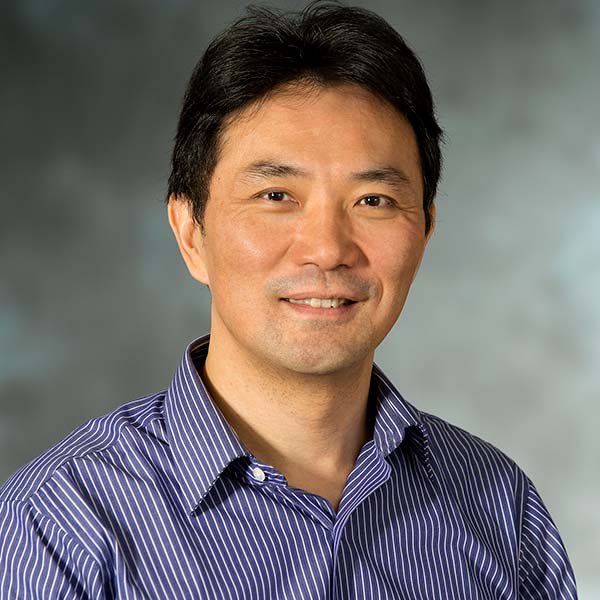


Principal Investigator(s):
Zhi-Li Zhang, Distinguished McKnight University Professor & Qwest Chair Professor of Computer Science and Engineering – University of Minnesota
Associate Director for Research – Digital Technology Center
Raphael Stern, Associate Professor of Civil, Environmental, and Geo-Engineering – University of Minnesota
Project Abstract:
In rural Minnesota, intersections continue to generate the second largest percentage of serious crashes, most of which are the result of right-angle crashes, because right-angle conflict points have the most potential for kinetic energy. Right-angle crashes occur because drivers are either unaware of the intersection (i.e. running the stop sign) or choose an inappropriate gap when proceeding into an intersection. In either case, drivers are not aware of a conflict. This project explores the use of augmented vehicle-to-everything (V2X) technology to enhance driver situational awareness via vehicle-specific timely alerts as drivers approach a rural intersection. While V2X technologies have been much talked about in the past, recent years have seen a renewed push by the U.S. Department of Transportation (USDOT) to implement and demonstrate the benefits of V2X for safety. Today’s onboard units (OBUs) and roadside units (RSUs) not only support the new cellular vehicle-to-everything (C-V2X) technology but also have built-in 4G/5G connectivity. What is particularly exciting about emerging 5G technologies is that besides much higher bandwidth and potentially lower latency, it has become possible to deploy the so-called “private” 5G networks for vertical use cases (such as safety applications in transportation systems). In other words, instead of relying on commercial mobile network operators such as AT&T, T-Mobile, and Verizon, one can deploy a customized (and much cheaper and simplified) 5G network that operates on, say, shared spectrum bands—such as CBRS band—using off-the-shell programmable radio units and (open-source) software components. Furthermore, satellite communication technologies such as Starlink have also become cheaper and more widely available; they are particularly suited for rural areas where commercial 4G/5G services may be spotty or unavailable. These emerging communication technologies make it possible to support V2X-enabled safety applications, augmented with 5G/Starlink connectivity, without relying on commercial mobile network operators. This project explores utilizing C-V2X communication technology—augmented by 4G/5G (and if needed, Starlink) communication technologies and advanced sensing (e.g., cameras and LiDAR in critical intersections)—to reduce the risk of serious intersection crashes. The objectives of this project are to 1) construct a testbed that integrates various sensors and communication devices, and 2) to test different methods for effectively communicating these situational awareness alerts to drivers on rural roads. This knowledge-building research will provide an understanding for what safety and operational benefits may be possible in the near future.
Institution(s): University of Minnesota
Award Year: 2025
Research Focus: Safety, Mobility
Project Form(s):
Last updated: