
Purdue University Participates in 3rd Annual Autonomous Marine Transportation Competition
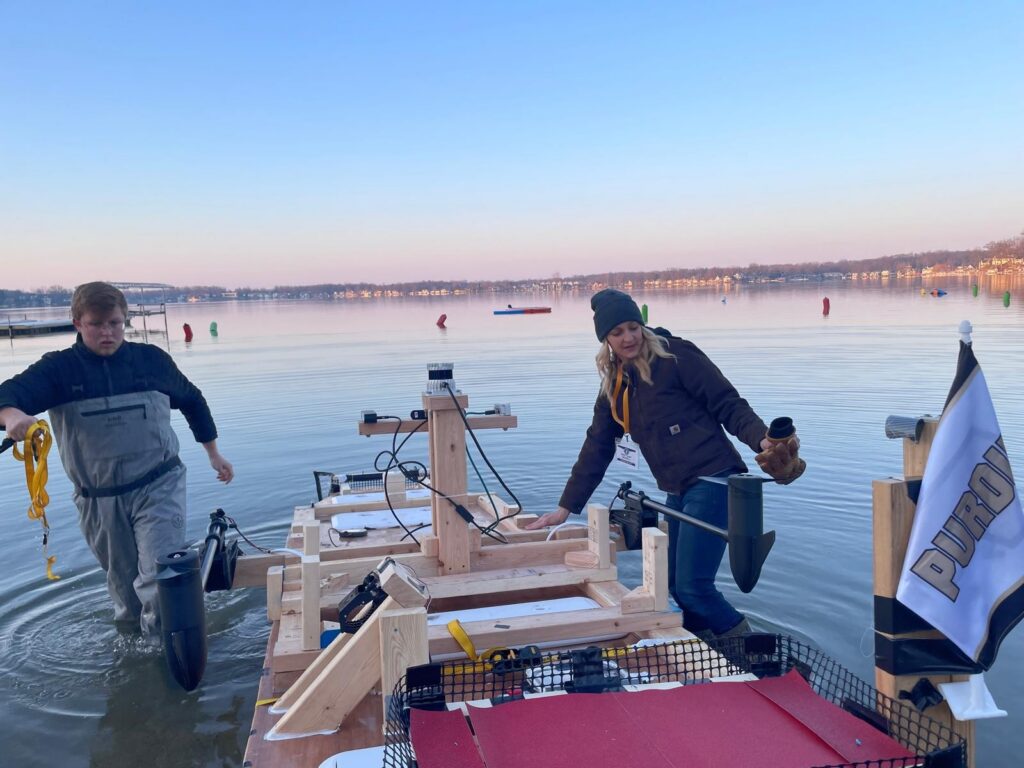
Researchers from the Center for Connected and Automated Transportation (CCAT) will participate in the 3rd Annual Artificial Intelligence Maritime Maneuver Indiana Collegiate Challenge (AIMM ICC), taking place April 17–18, 2026, at Pokagon State Park in Angola, Indiana.
The CCAT team includes Samuel Labi, Richard Ajagu, Andres Moreno, and Justin Gan, working in collaboration with Purdue Polytechnic, led by principal investigator Brittany Newell, and the Purdue Roboat Club. Student team members include Alex Valdes, Andrew Shelley, and Steve Van Hulle. The effort is also supported by Tim Murphy and Ricardo from the U.S. Naval Surface Warfare Center. The Purdue team finished as the second-place Overall Grand Champion in the 2025 competition.
The AIMM ICC is hosted by the Naval Surface Warfare Center Crane Division with support from the Office of Naval Research. The organizing committee includes Jason Blume of Trine University and Amy Ruggles of the U.S. Navy. The competition was established following a congressional funding initiative led by Congressman Jim Banks to support a partnership between NSWC Crane and Trine University.
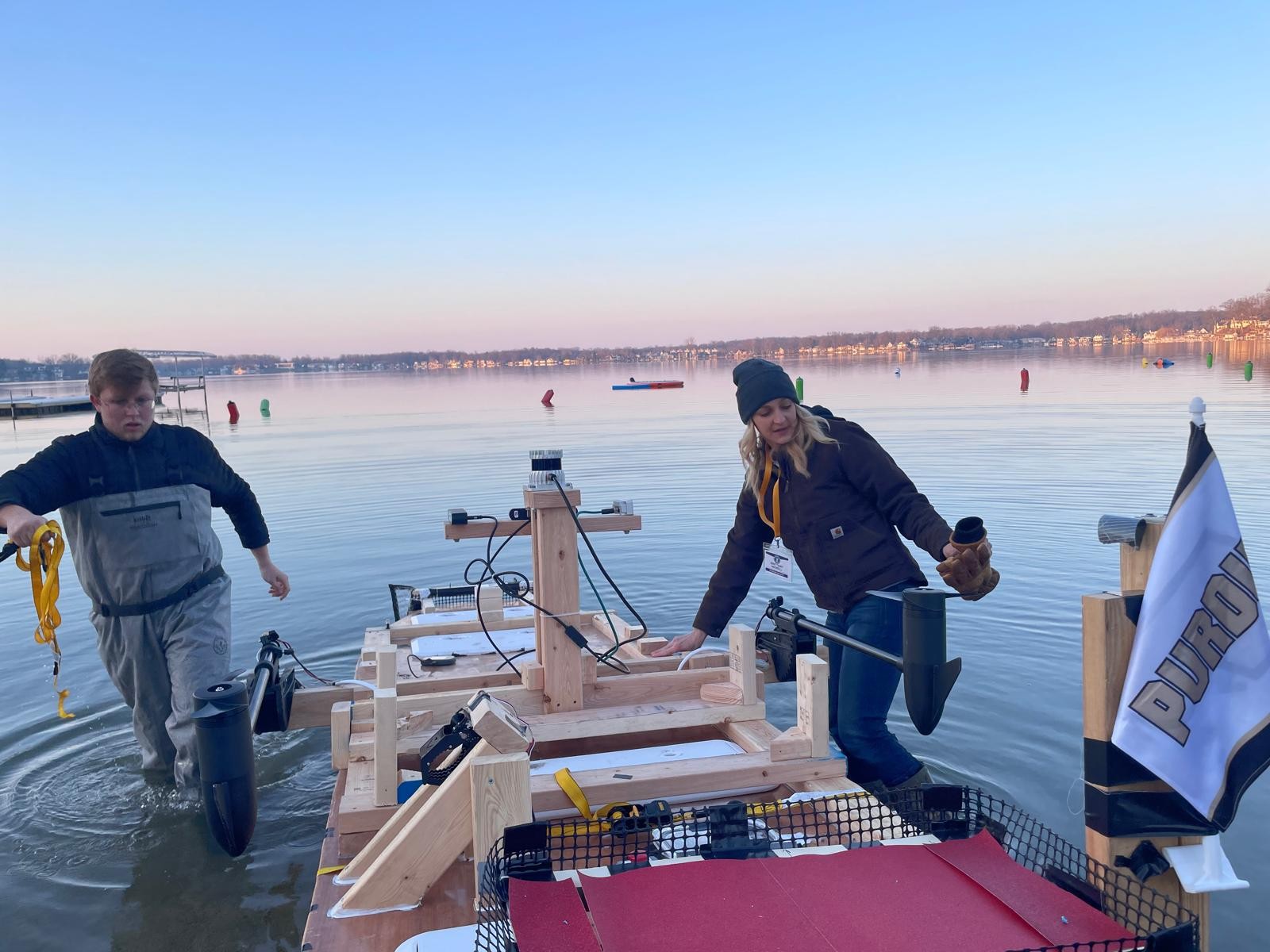
As part of the challenge, sponsors provide participating universities with a low-cost, easy-to-build, low-profile vessel platform designed for autonomous maritime applications. Each team receives a vessel kit, sensor package, and funding for materials and labor to develop and deploy their system. The vessels can be adapted for a range of missions, including marine transportation, stealth operations, supply delivery, and search-and-rescue activities.
This story was written by Samuel Labi of Purdue University and edited by Calvin Tuttle of the Center for Connected and Automated Transportation (CCAT).