
Trust vs. takeover: AV attitudes dictate driver control at J-turn intersections
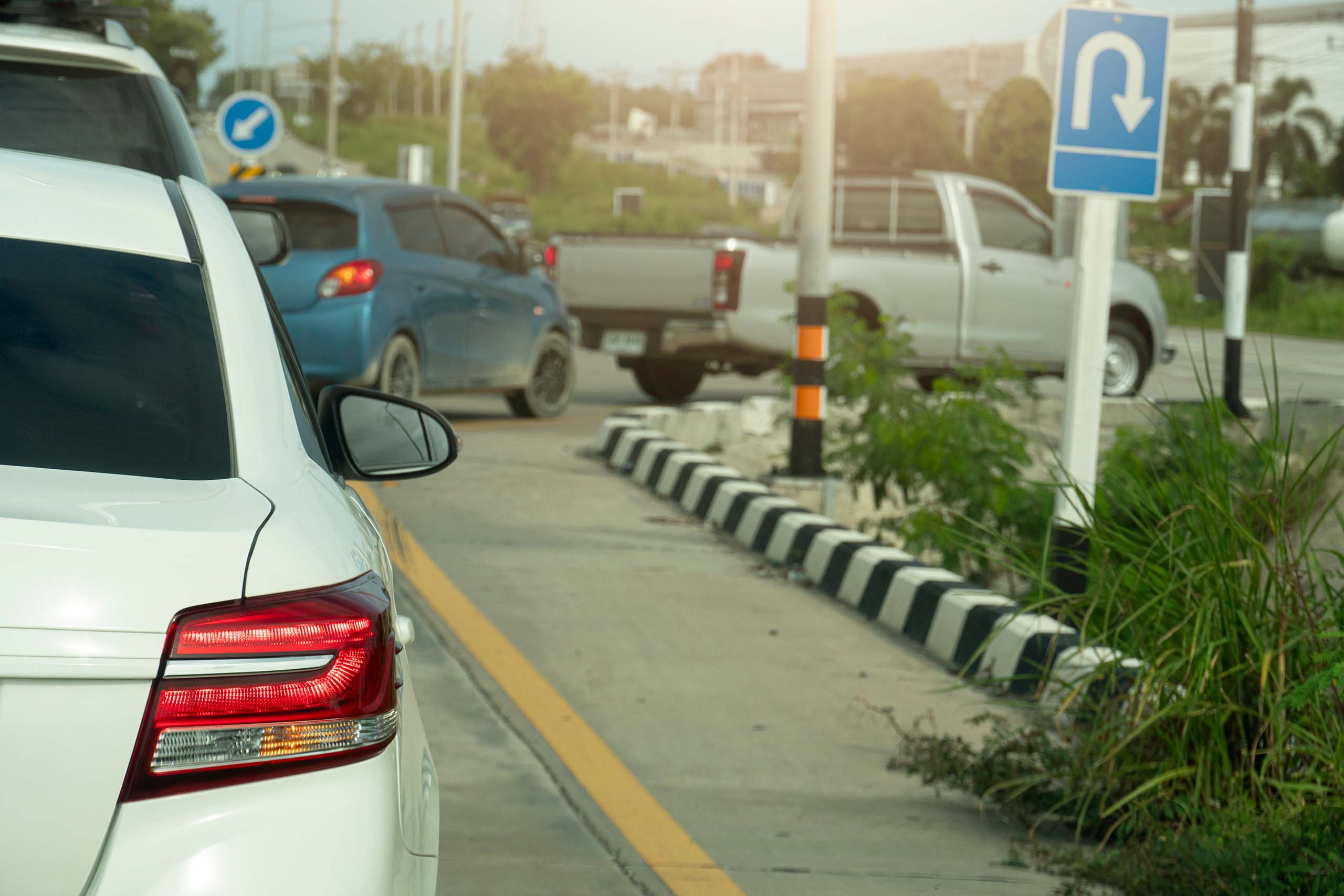
Photo credit: Adobe Stock
As vehicles travel along rural highways, a mistimed entrance from a side-road stop sign could result in a fatal high-speed crash. An increasingly popular engineering solution to this dangerous situation is the J-turn intersection, which replaces risky thru-traffic maneuvers with controlled U-turns to eliminate the most lethal right-angle collision points.
While J-turn intersections are already saving lives, a new variable is entering the equation: Level 3 automation. In these conditionally automated vehicles (AVs), the car handles the steering, but the human must remain ready to intervene. Nichole Morris, director of the University of Minnesota’s Human Safety Factors Laboratory and a CTS scholar, explains that this creates a tension for drivers between trusting the machine and the human impulse to take control.
“Level 3 automation could significantly increase rural road safety, but that can only happen if drivers use it,” Morris says. “We need to know what makes a driver reach for the wheel when the car is already doing the right thing.”
A new study funded by the U.S. Department of Transportation through the Center for Connected and Automated Transportation (CCAT) examines driver takeover decisions and trust of AVs at rural intersections. In the study, Morris and her team wanted to determine whether the physical complexity of a J-turn “scares” drivers into taking over the wheel, or if the decision is rooted in something deeper.
The researchers conducted an online survey of 271 licensed Minnesota drivers. Participants were asked to view a selection of high-fidelity simulated videos showing an AV navigating J-turns, roundabouts, traditional intersections, and work-zone intersections. After viewing each video, participants decided whether they would have assumed manual control and rated their trust in the technology.
“This method allowed us to gather data from a wide range of drivers, providing a clearer picture of the psychological threshold where drivers decide they no longer trust an automated vehicle to handle the driving environment,” Morris adds.
The findings revealed a critical insight: Driver attitudes mattered far more than infrastructure design. The true predictors of manual takeover included:
- Automation literacy: People who already used adaptive cruise control or lane assist in their own cars were significantly more trusting.
- Demographic factors: Education levels and location were strong indicators; urban drivers tended to trust the automation more than their rural counterparts.
- “Pro-J-Turn” bias: Drivers who already believed J-turns were an effective safety solution were much more likely to let the vehicle navigate autonomously.

“We discovered that trust is an internal mindset. It’s not about how the pavement is laid out. It’s about who the driver is and what they’ve been taught to expect from technology.”
Dr. Nichole Morris, Director of the Human Factors Safety Laboratory, University of Minnesota
The study concludes that maximizing the safety benefits of automation on rural roads will depend heavily on public education. This will be especially vital for preventing “Out-of-the-Loop” syndrome, a dangerous state during which the driver takes control but isn’t mentally prepared for the task.
In future phases of the project, researchers intend to build on these findings using the Human Factors Safety Lab’s driving simulator. This will allow the team to move beyond survey responses and measure driver reactions and takeover decisions in real time. By continuing to decode the trust relationship between humans and AVs, researchers will work toward building a driving environment in which motorists feel confident letting technology handle complex maneuvers — ultimately improving rural road safety.
CTS is a research partner within the CCAT consortium, located at the University of Michigan.
This story was written by Megan Tsai, University of Minnesota Center for Transportation Studies contributing writer.