
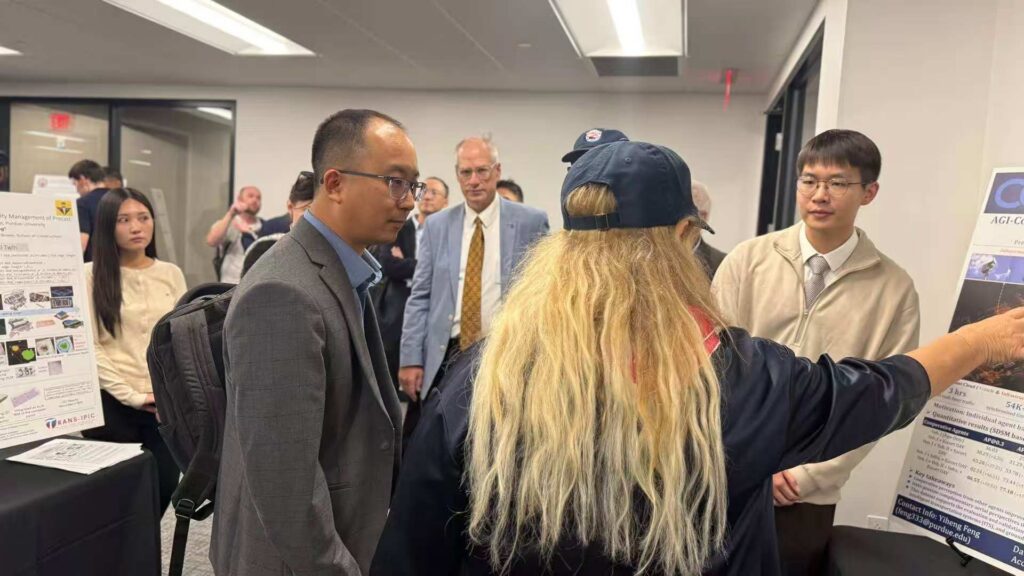
USDOT’s Seval Oz visits Purdue for briefing on CCAT research
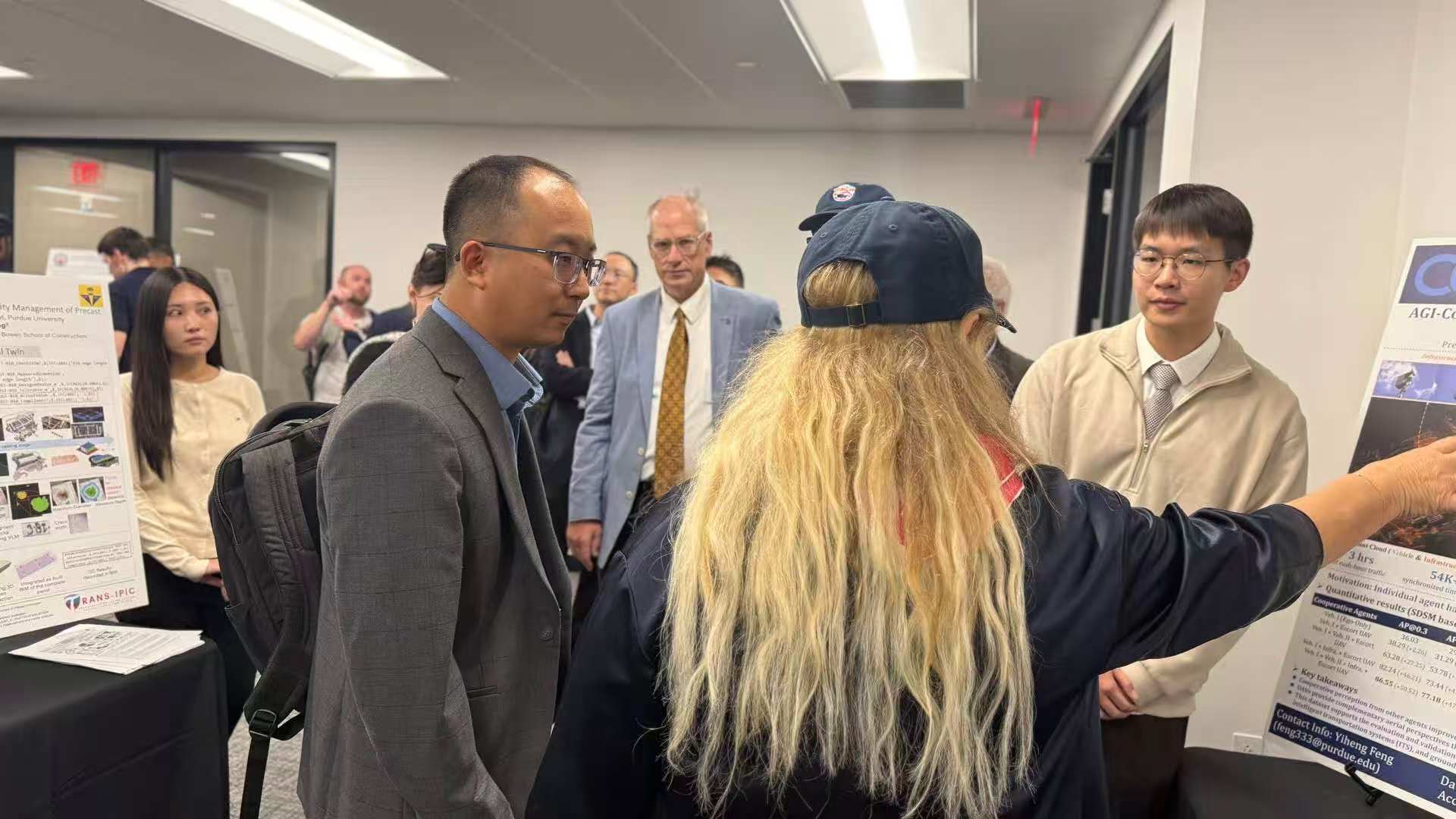
Photo credit: Bibek Poudel/Purdue University
Seval Oz, assistant secretary for research and technology at the U.S. Department of Transportation, visited Purdue University on October 29th, which included a briefing on the Center for Connected and Automated Transportation’s work on campus. The visit was organized by the National Center for Transportation Cybersecurity and Resiliency, a USDOT National University Transportation Center led by Clemson University.
The visit started with a student poster session, featuring two CCAT projects. Tianheng Zhu presented “Cost Benefit Analysis of an Infrastructure-Vehicle Cooperative Perception System,” led by Feng, Wang, and Andrew Tarko. Rahul Suryakant Sakhare presented “Methodologies for Monitoring Work Zone Performance Measures across State Border Highways Using Connected Vehicle Data,” led by Bullock. Oz showed strong interest in both projects and spent considerable time talking with the students about their research.
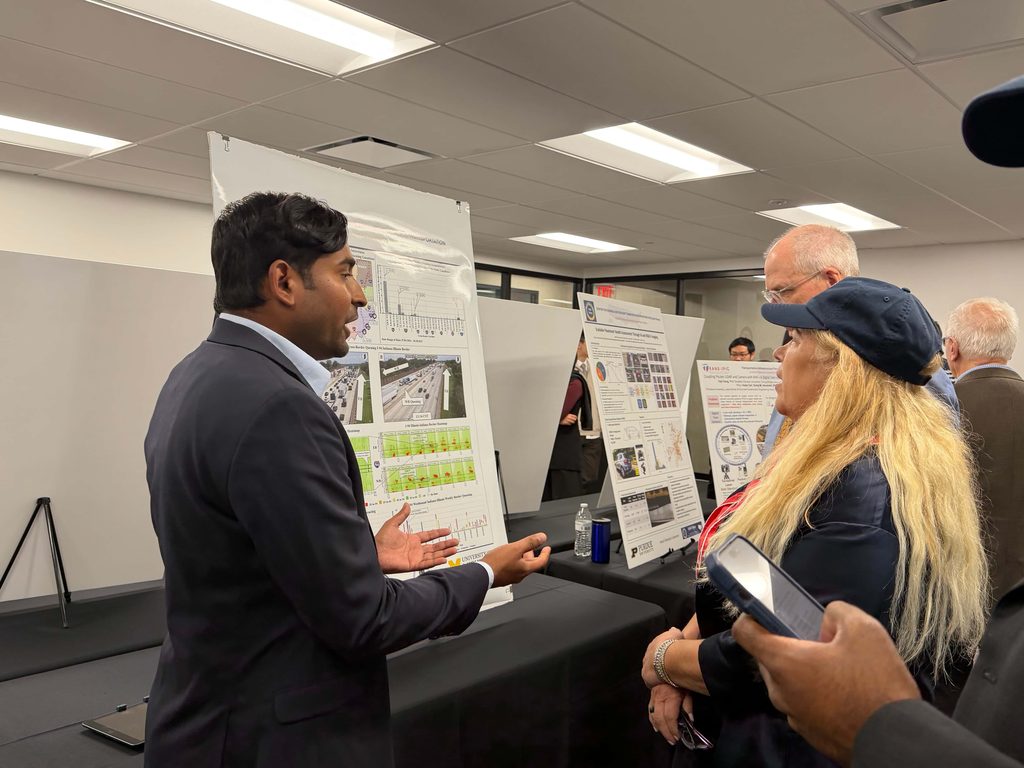
Photo credit: Bibek Poudel/Purdue University
Yiheng Feng, an associate professor in Purdue’s Lyles School of Civil and Construction Engineering, provided an overview of the consortium as well as deep dives on four CCAT-funded projects led by Purdue faculty members:
- Economical Acquisition of Intersection Data to Facilitate CAV Operations Phase II – Implementation
- CAV Pilot Development and Deployment in Midwest Winter
- Cost Benefit Analysis of an Infrastructure-Vehicle Cooperative Perception System
- Methodologies for Monitoring Work Zone Performance Measures across State Border Highways Using Connected Vehicle Data
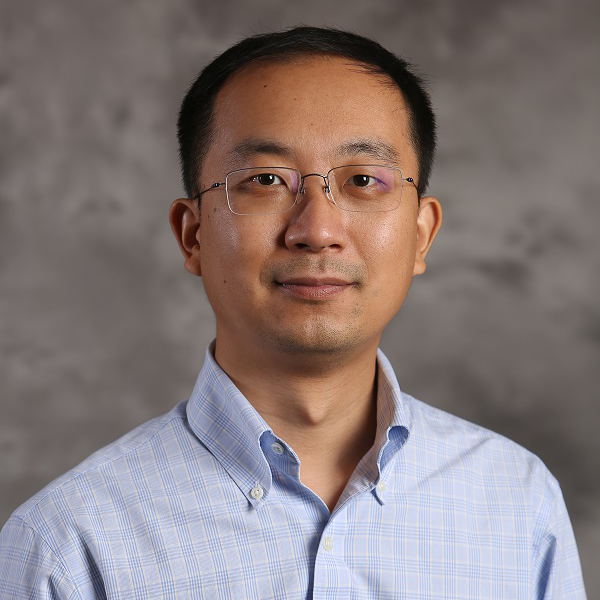
“It was a privilege to show Assistant Secretary Oz how CCAT support is turning research into tools that agencies and drivers can use. Just as important, our students had the chance to share their work directly with USDOT leadership, which is exactly the kind of experience CCAT is designed to provide.”
Yiheng Feng, Associate Professor of Civil Engineering, Purdue University
His own work uses LiDAR-based cooperative perception to improve safety for vulnerable road users. Ziran Wang’s research enables passengers to guide automated vehicles’ driving behavior using natural language. Samuel Labi developed a low-cost device to collect traffic signal timing data, and Darcy Bullock uses connected-vehicle data to measure congestion across state borders. Feng also highlighted the CCAT Cybersecurity Working Group, which he co-chairs, along with the student-run Next Generation Transportation System Conference and CCAT’s HBCU Conference. The visit highlights CCAT’s leadership within the UTC program and connected and automated vehicle research community.
This story was written by Calvin Tuttle of the Center for Connected and Automated Transportation (CCAT).